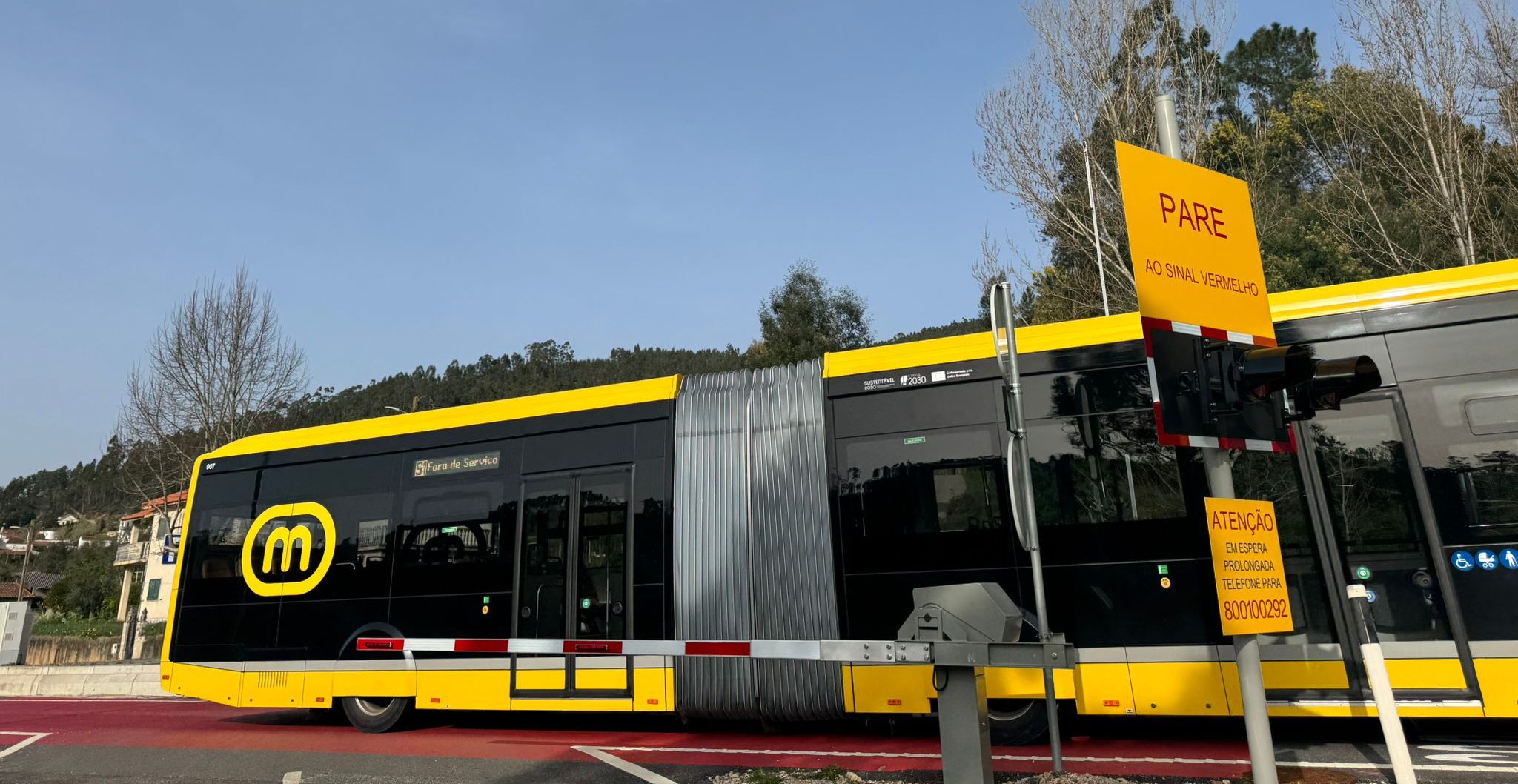
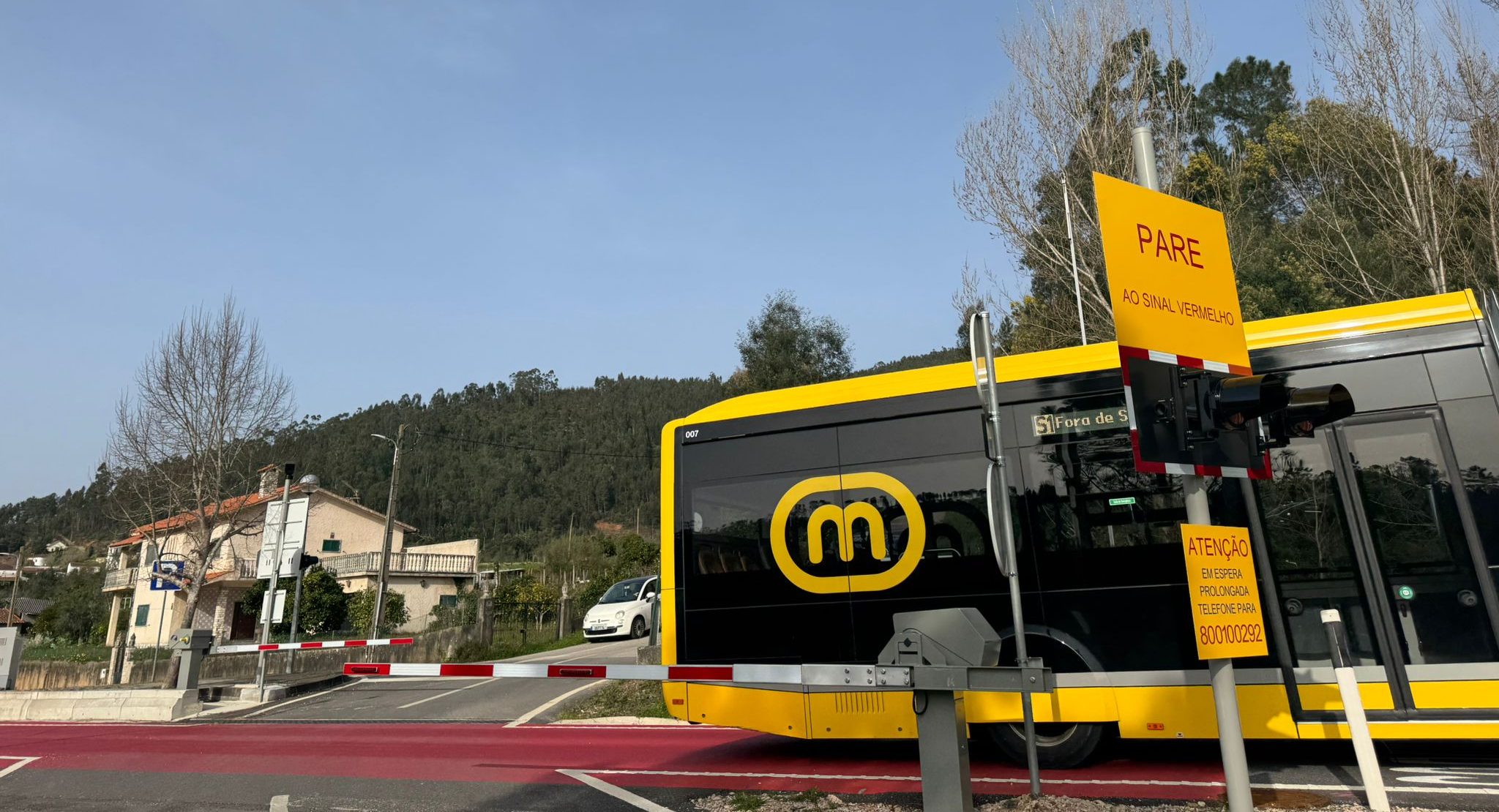
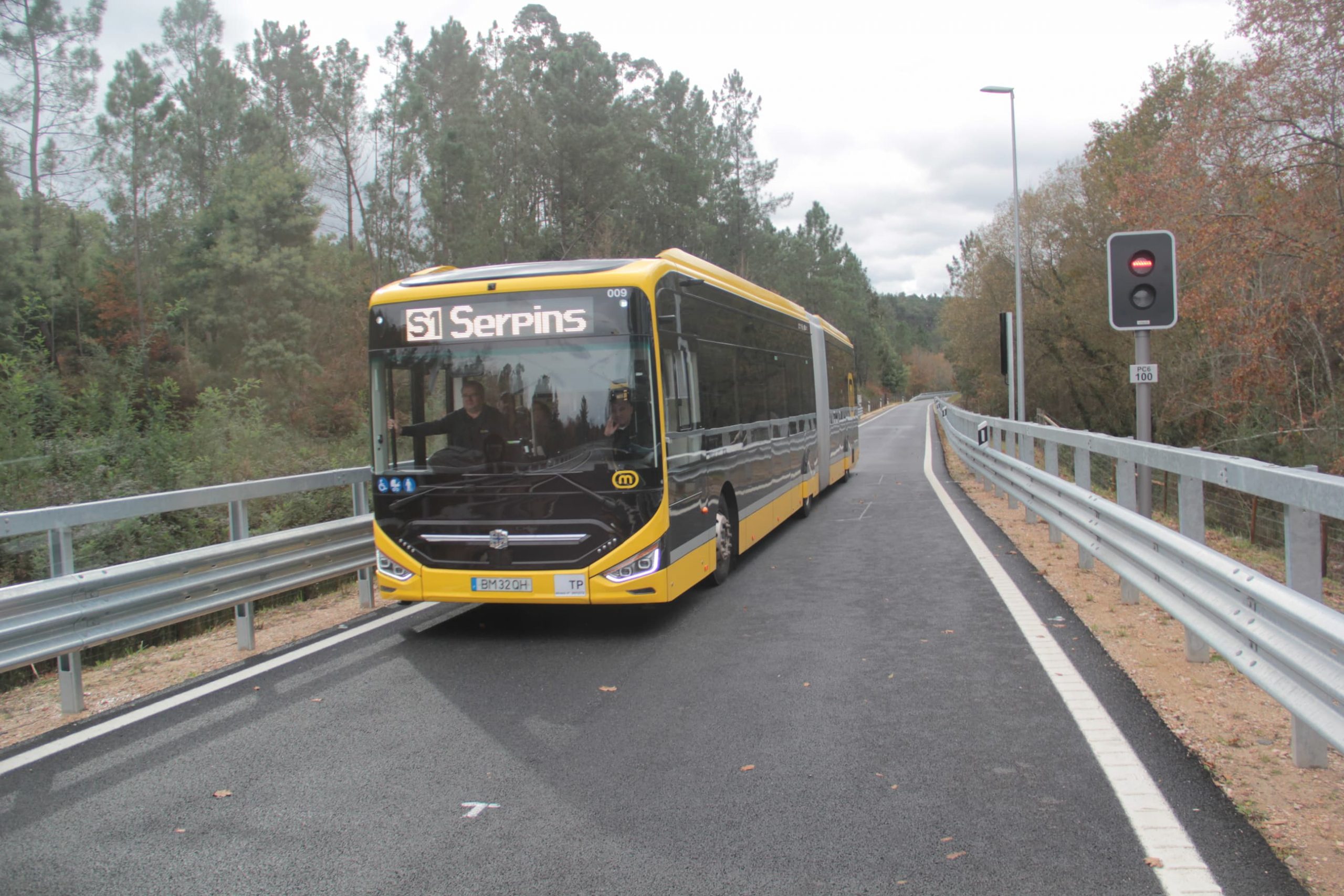
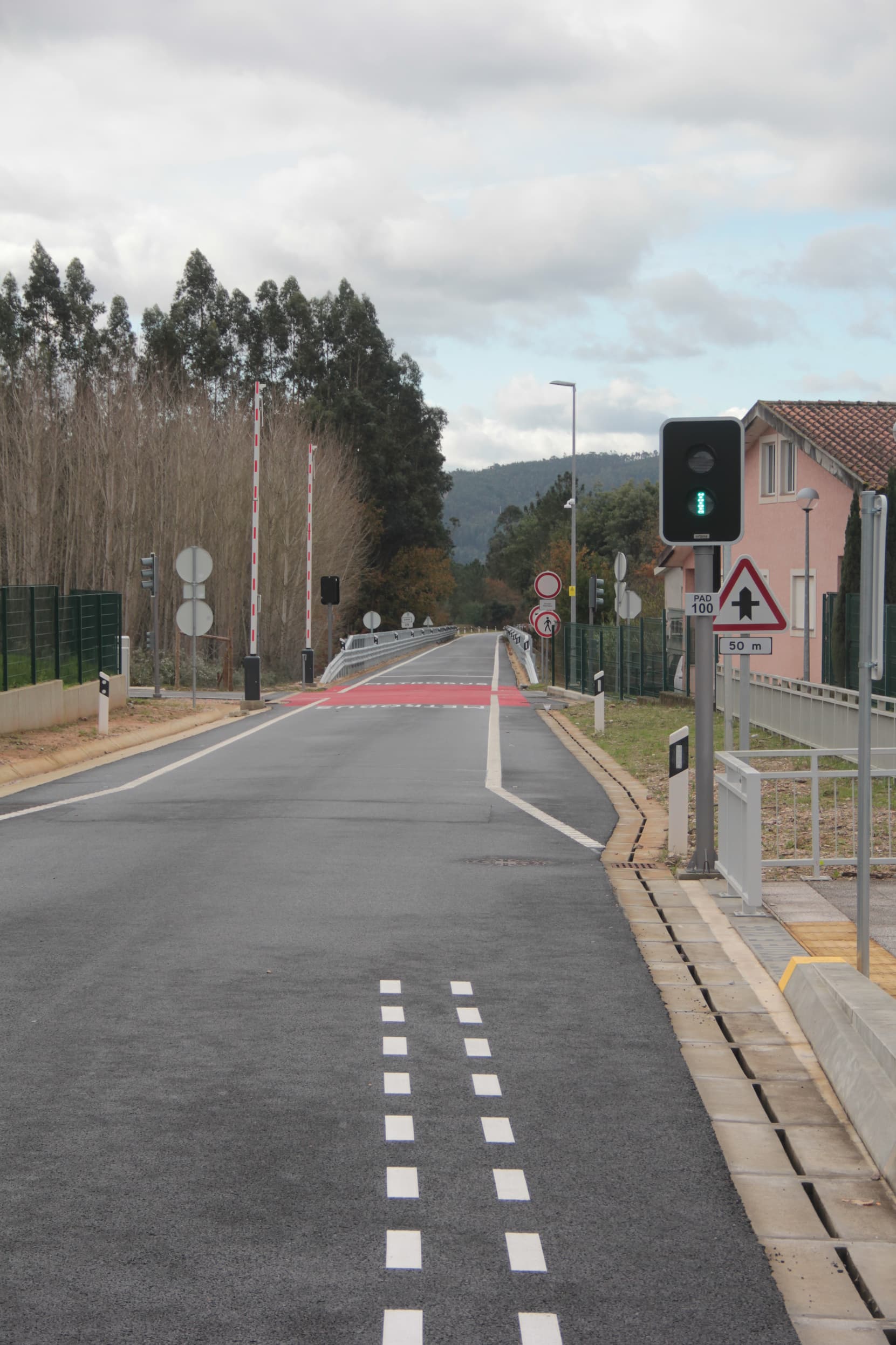
The Mondego Mobility System (SMM) recently came into operation between Portagem and Serpins (Phase A), covering approximately 36 of the planned 42 km, with a signalling solution developed by Efacec, designed to ensure high levels of safety, reliability and operational control.
As a Metrobus system operating on a dedicated single-track corridor, the solution required the adaptation of railway signalling principles to the specific context of high-capacity road operation, ensuring the safe management of circulation along the entire infrastructure.
- 42 km total network
- 30 km suburban service on single-track corridor
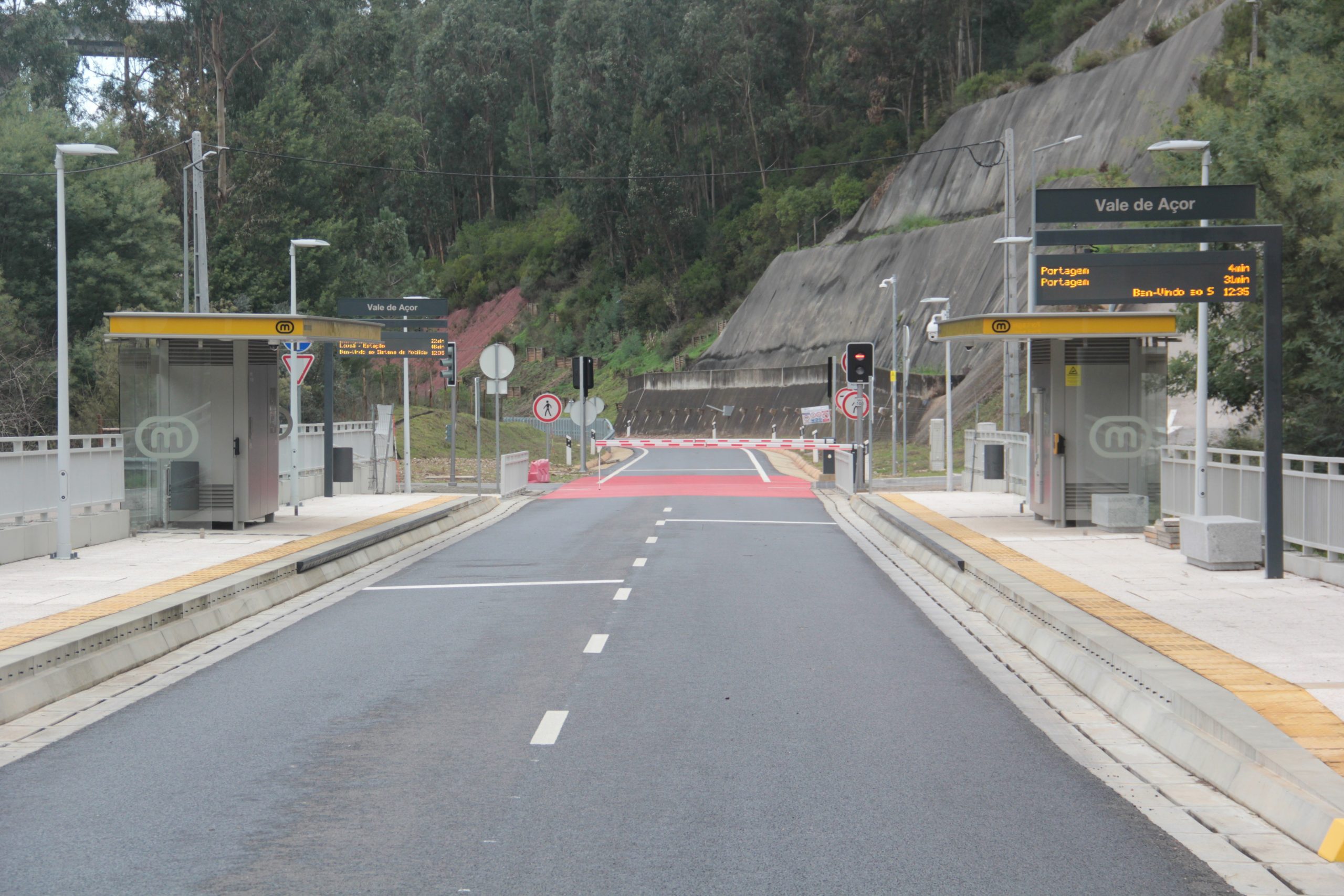
- 35 stations and crossing points
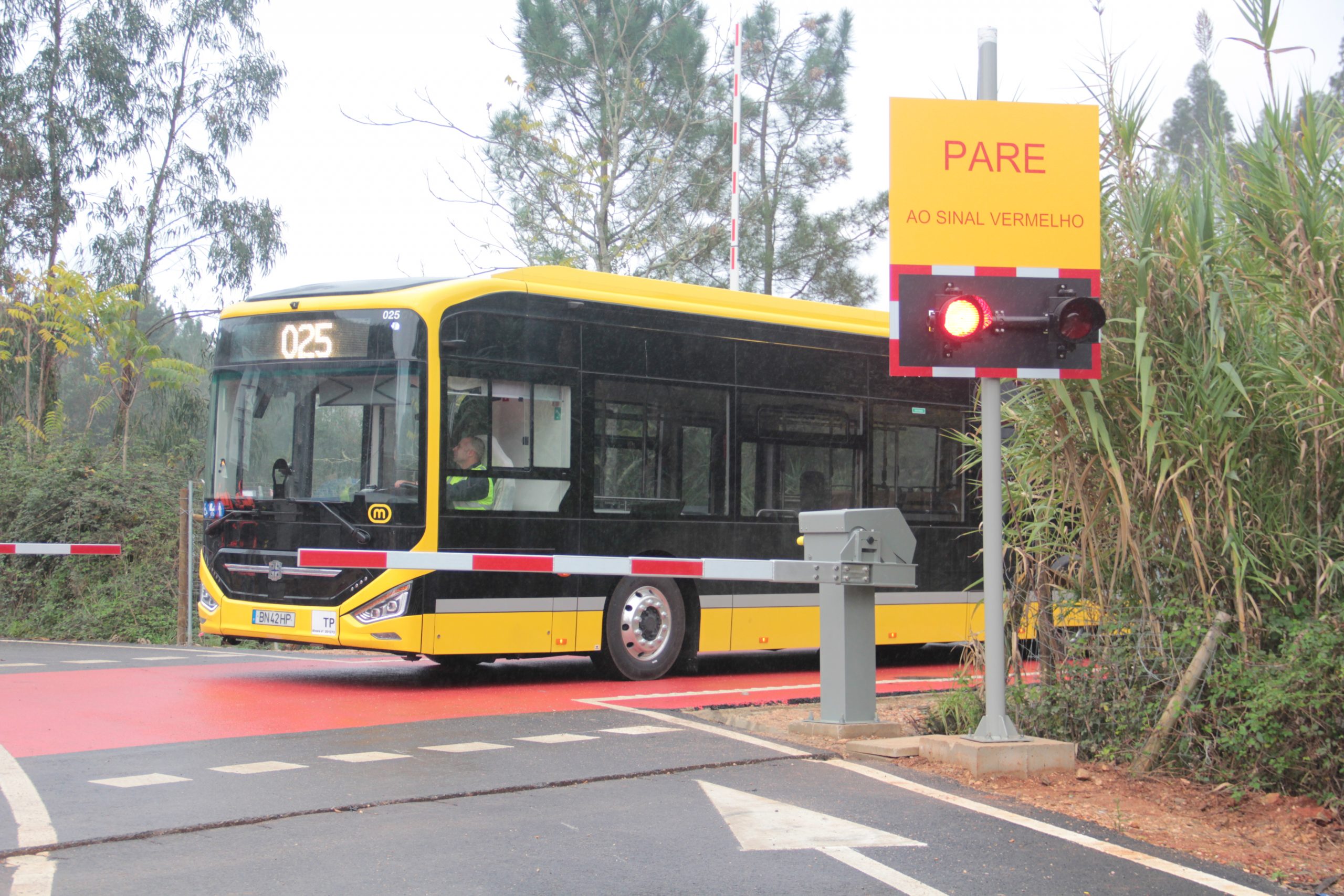
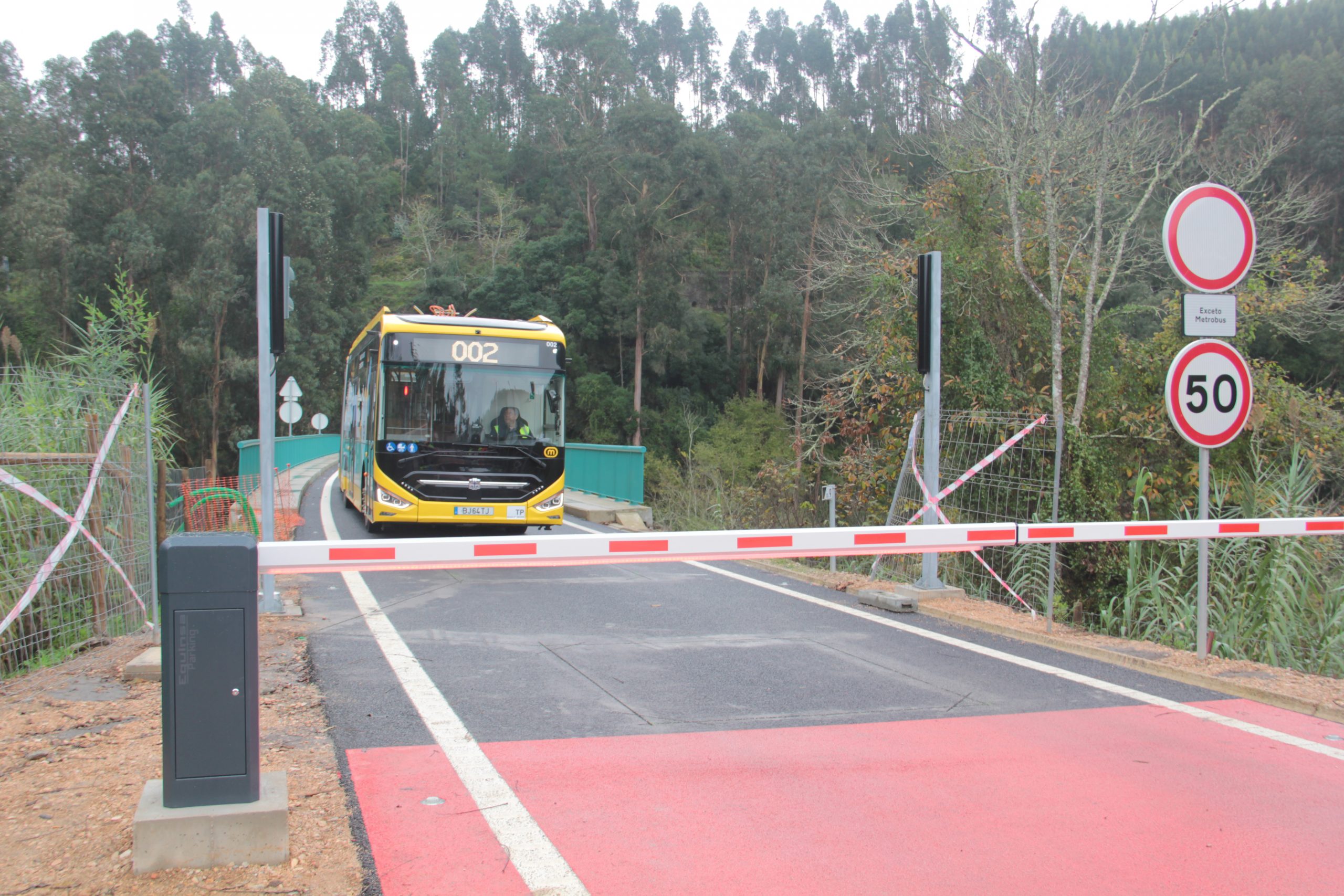
- 12 road level crossings
Architecture and operating principles
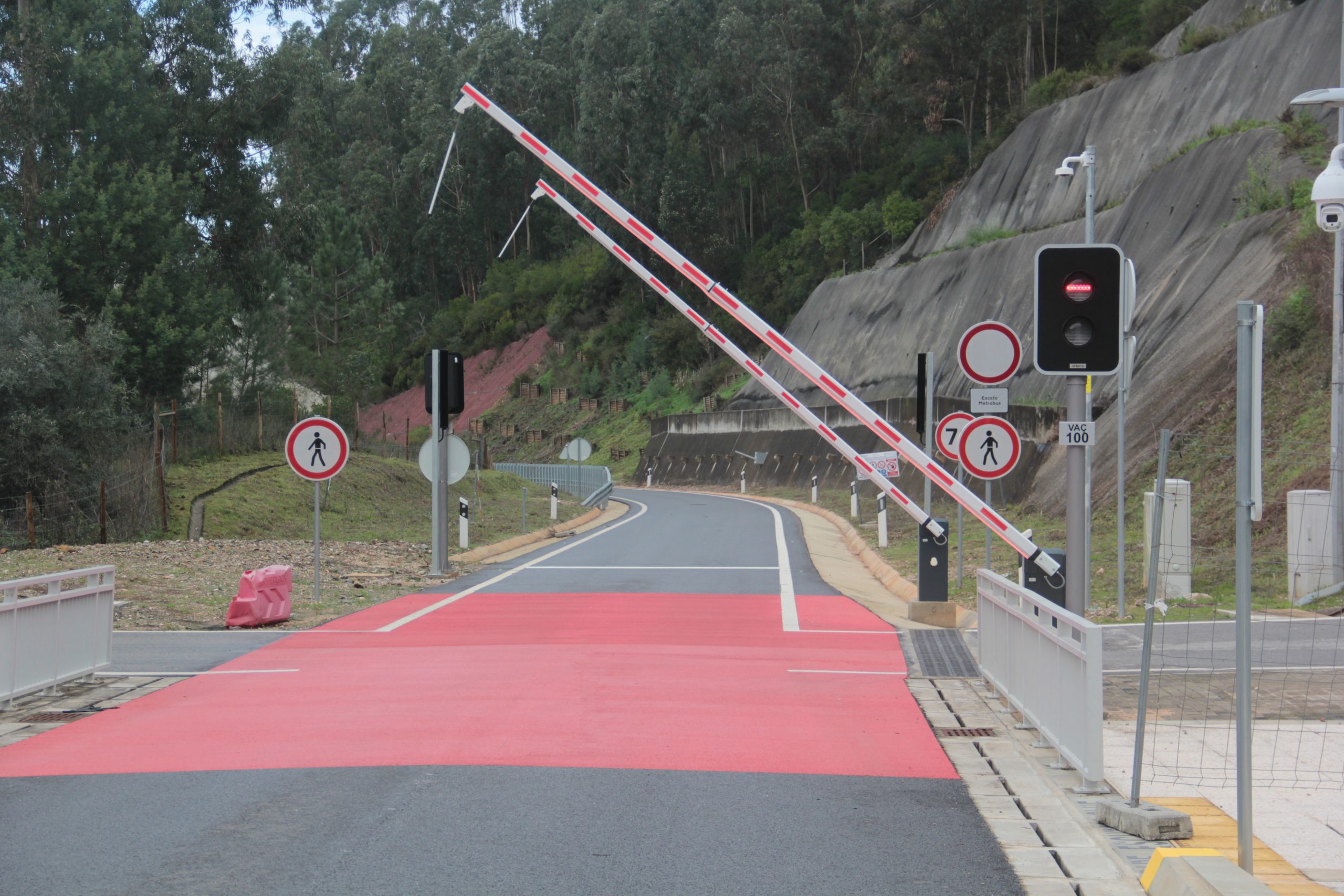
- Movement authorities: a railway interlocking system controls access to the corridor and transmits indications to drivers through light signals.
- Integrated crossings: all crossings are connected to the signalling system, ensuring a safe and efficient management.
- Track monitoring: the system continuously monitors the occupancy of each corridor section, with movement authorities based on real-time information.
- Centralised command and control: operations are supervised in real time through Efacec’s Efarail platform, which displays equipment status and vehicle location.
The integration of the SMM corridor within the suburban area entails the presence of multiple road and pedestrian crossings. Some of these crossing’s interface with road traffic light systems that regulate traffic in the surrounding areas.
In areas where higher speeds are common or where the geometry of the road junction is less suitable (e.g. poor visibility), control is provided by the same level crossing systems that Efacec supplies for railway applications.
Vehicle Detection
To ensure safe vehicle detection in each section of the line, a system specifically adapted to the characteristics of the Metrobus was developed. The solution leverages intrinsic vehicle properties, such as metallic mass and opacity, combining multiple sensors at each detection point to identify both vehicle passage and direction of travel.
The collected information allows continuous determination of corridor section occupancy. This data is transmitted to the signalling system and crossings, ensuring that movement authorities are issued only when safety conditions are fully met. The method replicates the railway block zone concept, delivering safety levels equivalent to those of a conventional railway system.
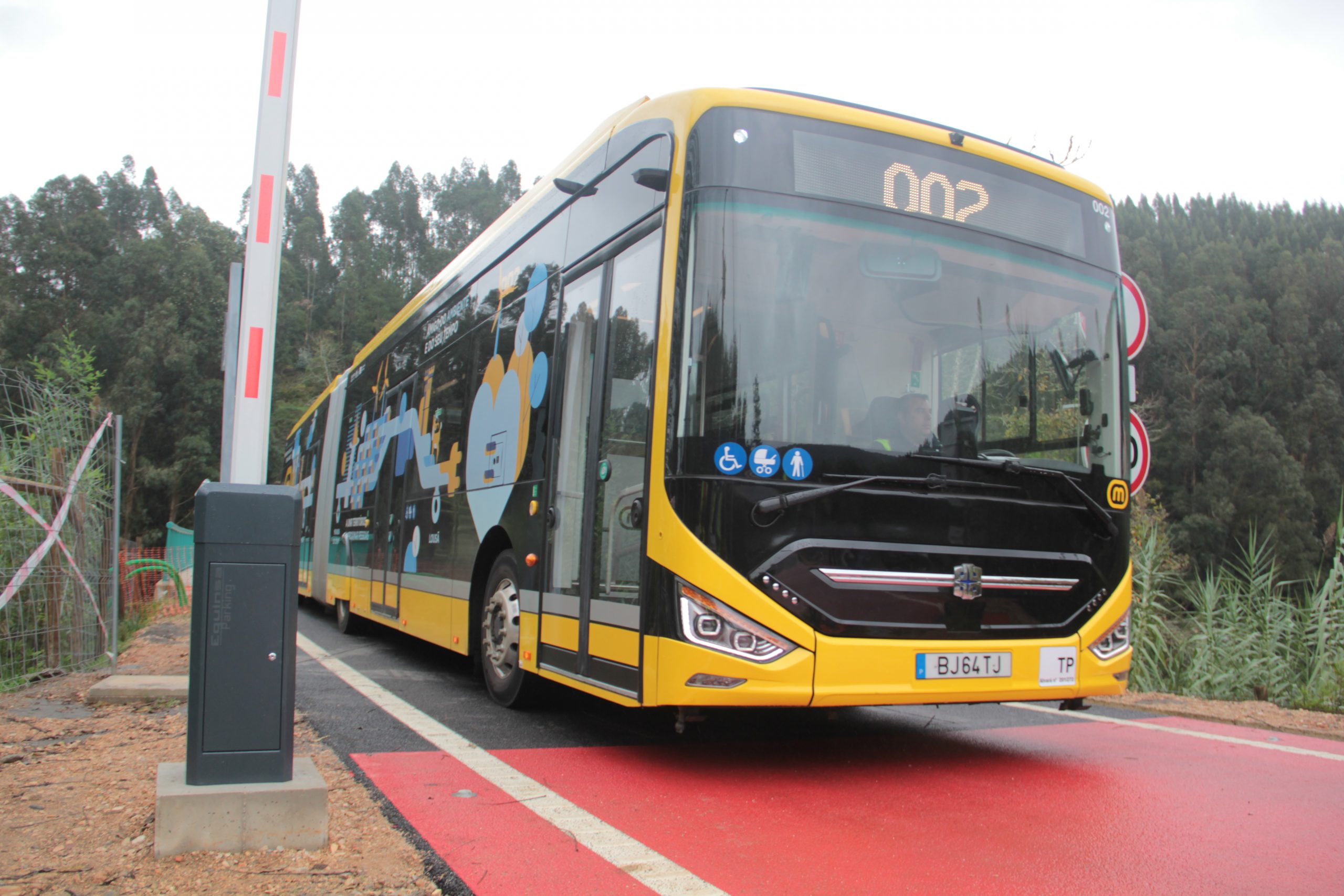
Additionally, Metro do Mondego vehicles are equipped with electronic identifiers, enabling the system to distinguish between authorised and unauthorised vehicles. If an unauthorised vehicle enters the corridor, an alarm is automatically generated and transmitted to the control centre in real time.
The entire suburban signalling system — including vehicle detection — has been certified according to the applicable railway standards, achieving SIL 4, the highest safety integrity level defined within this framework.
Critical engineering in service of sustainable mobility
This project demonstrates Efacec’s capability to design, develop and implement complex safety-critical systems, combining technological innovation, engineering expertise and extensive experience gained through national and international projects.
By applying railway principles to a Metrobus system, Efacec contributes to safer, more efficient and more sustainable mobility solutions, reinforcing its position as a trusted technology partner in critical transport infrastructure.